2026 HSA Advantage: Save 25% More on Healthcare Costs
Anúncios
The 2026 HSA Advantage can improve healthcare savings through higher contribution limits, expanded eligibility, and valuable federal tax benefits.
A 25% savings result is possible in some situations, but it is not guaranteed and depends on each taxpayer’s income, contributions, medical expenses, and tax circumstances.
HSA Advantage reflects several real changes to Health Savings Accounts. New rules expand access while annual contribution limits also increase.
Anúncios
HSAs can reduce the after-tax cost of qualified medical expenses because eligible contributions receive favorable federal tax treatment. Actual savings vary according to income, payroll arrangements, and how the account is funded.
For that reason, the 25% figure should be viewed as an illustrative savings target rather than a guaranteed outcome. The strongest strategy starts with understanding the official 2026 rules.
Understanding the 2026 HSA Advantage Framework
The 2026 HSA Advantage framework combines inflation-adjusted contribution limits with legislative changes that expand who may qualify. These updates make HSAs relevant to a broader range of consumers.
For 2026, the federal contribution limit is $4,400 for self-only coverage and $8,750 for family coverage. These limits generally include both employee and employer contributions.
Eligibility rules also changed for certain bronze and catastrophic health plans and qualifying direct primary care arrangements. These are significant changes compared with previous HSA rules.
Key Regulatory Adjustments for 2026

The IRS set the 2026 HSA Advantage contribution limits at $4,400 for self-only coverage and $8,750 for family coverage. Those amounts increased from the corresponding 2025 limits.
Beginning January 1, 2026, qualifying bronze and catastrophic individual-market plans can be treated as HSA-compatible under new federal rules. Certain off-Exchange versions may also qualify.
Some direct primary care arrangements can also coexist with HSA eligibility beginning in 2026. HSA funds may additionally be used tax-free for qualifying periodic DPC fees.
- 2026 HSA limit: $4,400 for self-only coverage.
- 2026 HSA limit: $8,750 for family coverage.
- Expanded eligibility for qualifying bronze, catastrophic, and DPC arrangements.
Eligibility and Enrollment in 2026
Traditional HSA Advantage eligibility generally requires qualifying high-deductible health coverage and no disqualifying additional health coverage. Medicare enrollment and dependent status can also affect eligibility.
For standard HDHPs in 2026, the minimum deductible is $1,700 for self-only coverage and $3,400 for family coverage. Maximum in-network out-of-pocket amounts are $8,500 and $17,000.
Anúncios
The new bronze and catastrophic plan rules create exceptions to some traditional HDHP requirements. Consumers should therefore confirm their specific plan’s HSA eligibility rather than relying only on the deductible.
Maximizing Your Savings: The 25% Boost Strategy
A 25% improvement in healthcare savings is not built into HSA Advantage law and cannot be promised for every account holder. Results depend heavily on federal and state tax treatment.
Someone in a higher marginal tax bracket may receive greater immediate tax value from deductible or pre-tax contributions. Payroll treatment can also affect the total benefit in some employer arrangements.
Longer-term results depend on contribution levels, qualified expenses, investment choices, fees, and market performance. A disciplined strategy can improve savings without guaranteeing a specific percentage.
Optimizing Contributions and Investments
Increasing HSA Advantage contributions can strengthen the tax benefit when the individual remains eligible. Contributions should never exceed the applicable annual limit after employer contributions are included.
Some HSA providers allow balances above a required cash threshold to be invested. Available funds, fees, and investment choices vary significantly between administrators.
People age 55 or older may generally make an additional $1,000 annual catch-up contribution. Eligibility and account ownership rules still need to be satisfied.
- Track both employee and employer contributions toward the annual limit.
- Review investment fees, cash requirements, and available fund choices.
- Consider the $1,000 catch-up contribution beginning at age 55.
Leveraging Tax Advantages for Enhanced Savings
Eligible HSA Advantage contributions can generally be excluded from federal taxable income or deducted, depending on how they are made. Employer contributions can also receive favorable federal treatment.
Investment earnings inside an HSA generally grow without current federal income tax. Qualified distributions for eligible medical expenses can also be received tax-free.
State tax treatment is not identical everywhere, so the federal “triple tax advantage” does not always translate perfectly at the state level. Taxpayers should verify their own jurisdiction.
Navigating Eligible Expenses and Withdrawals
Qualified medical expenses determine whether an HSA distribution remains tax-free. Many healthcare, dental, vision, prescription, and medical-equipment expenses can qualify under federal rules.
Some over-the-counter medicines and menstrual-care products can also be reimbursed from an HSA. General wellness purchases do not automatically qualify simply because they relate to health.
Using HSA money for non-qualified purposes can create tax consequences. Accurate records are therefore essential whenever distributions are taken from the account.
Understanding Qualified Medical Expenses
Qualified expenses can include deductibles, copayments, eligible medical treatment, prescription drugs, dental services, and vision care. Qualification ultimately depends on the federal tax rules.
Over-the-counter medications may generally be paid or reimbursed through an HSA Advantage without a prescription. Menstrual-care products are also specifically eligible under current law.
Expenses related only to general health may not qualify without additional medical conditions or documentation. IRS guidance should be checked before assuming an unusual purchase is eligible.
- Many medical, dental, and vision expenses can qualify.
- Over-the-counter drugs and menstrual-care products may qualify.
- General wellness expenses require careful review under IRS rules.
Strategic Withdrawal Planning
HSA owners are not required to reimburse themselves immediately after paying a qualified medical expense. A later tax-free reimbursement may be possible when proper documentation is retained.
This can allow HSA funds to remain invested while current medical bills are paid from other resources. The strategy introduces market risk and requires sufficient personal cash flow.
Receipts and documentation should demonstrate that the expense was qualified and incurred after the HSA was established. The same expense cannot also receive prohibited duplicate tax benefits.
Employer Contributions and Incentives
Employer HSA Advantage contributions can add meaningful value to a benefits package because the money becomes the employee’s property. The account remains portable after leaving the employer.
Employer contributions generally count toward the same annual HSA contribution limit as employee contributions. Workers should monitor the combined amount to avoid excess contributions.
Benefits vary widely among employers, so workers should compare contribution amounts, plan premiums, deductibles, networks, and out-of-pocket exposure together. Employer funding alone does not determine plan value.
Employer Matching and Wellness Programs
Some employers deposit a fixed amount into employee HSAs, while others link contributions to benefit elections or wellness activities. There is no universal employer matching requirement.
Wellness incentives may increase HSA Advantage balances when structured within applicable benefit rules. Employees should review their plan documents to understand how and when contributions are credited.
Employer contributions should be treated as part of total compensation when comparing job benefits. Their value should still be considered alongside premiums and expected medical expenses.
- Employer contributions increase the employee-owned HSA balance.
- Wellness incentives may provide additional deposits.
- Total employer and employee contributions remain subject to annual limits.
Choosing the Right HDHP for 2026
An HSA-compatible plan should be evaluated on more than its monthly premium. Deductibles, out-of-pocket maximums, prescription coverage, and provider networks can materially affect total healthcare spending.
A lower premium can be attractive for someone expecting limited medical use, but higher cost sharing creates additional financial risk. Individual health needs should remain central to the decision.
The new 2026 rules also mean some bronze and catastrophic plans can qualify for HSA purposes. Consumers should confirm eligibility and coverage details before enrolling.
The Long-Term Impact of the 2026 HSA Advantage
An HSA can support both current medical spending and longer-term healthcare planning because unused balances generally carry forward indefinitely. The account does not expire annually.
Money that remains invested may compound over many years, although investment gains are never guaranteed. Fees and market losses can also affect long-term results.
This long horizon makes HSAs particularly relevant for people who expect meaningful healthcare costs later in life. The strategy still needs to fit broader retirement priorities.
HSA as a Retirement Savings Vehicle
HSA Advantage funds can continue paying qualified medical expenses tax-free after retirement. This can help address deductibles, copayments, and other eligible healthcare expenses later in life.
After age 65, distributions for non-qualified expenses generally avoid the additional 20% penalty. Those non-medical distributions remain subject to ordinary federal income tax.
This treatment gives the HSA additional flexibility in retirement compared with its rules for younger account holders. Medical withdrawals can retain more favorable treatment.
- Qualified healthcare withdrawals can remain tax-free.
- Non-medical withdrawals after age 65 generally avoid the 20% penalty.
- Non-qualified withdrawals can still create ordinary income tax.
Planning for Future Healthcare Costs
Future healthcare costs are uncertain and vary according to insurance, health status, location, and medical needs. An HSA can provide a dedicated reserve for part of those expenses.
Consistent contributions may reduce reliance on general retirement assets when qualified medical costs arise. Investing unused funds can add growth potential but also introduces investment risk.
Healthcare savings should therefore be integrated with emergency reserves, retirement accounts, and insurance planning. An HSA is useful, but it should not replace every other financial priority.
Comparing HSA Advantage with Other Savings Options
HSAs differ from 401(k)s, IRAs, and FSAs because they combine healthcare spending features with long-term account ownership. Each account type serves a different financial purpose.
A 401(k) or IRA is primarily designed for retirement, while an HSA Advantage is specifically connected to qualified medical expenses and HSA eligibility. Contribution rules also differ substantially.
A diversified financial strategy may use several accounts rather than treating them as direct substitutes. Employer contributions and personal tax circumstances can influence the preferred order.
HSA vs. FSA: Key Differences for 2026
An HSA Advantage is owned by the individual and generally remains with that person after changing employers. Unused balances can continue rolling forward without an annual expiration rule.
Health FSAs are employer-sponsored arrangements and are generally subject to use-it-or-lose-it rules. Employers may offer a limited carryover or grace period when permitted.
For 2026, the health FSA salary-reduction limit is $3,400, with a maximum permitted carryover of $680 for plans offering that feature. HSA limits follow separate rules.
- HSA balances generally roll over indefinitely.
- FSA carryovers are limited and depend on the employer’s plan.
- HSA assets can potentially be invested; standard FSAs generally cannot.
Integrating HSA into Your Financial Portfolio
An HSA Advantage can complement retirement and emergency savings when the individual is eligible and has adequate cash flow. The appropriate contribution priority varies from person to person.
Employer 401(k) matching can be especially valuable because failing to contribute enough may leave employer money unused. HSA tax advantages can then be considered alongside other financial goals.
There is no universal rule requiring everyone to maximize an HSA before all other accounts. Debt, emergency savings, insurance, and liquidity needs can change the optimal strategy.
Common Pitfalls and How to Avoid Them in 2026
HSAs can provide substantial advantages, but errors involving eligibility, contributions, or withdrawals can create unexpected taxes. Rules should be reviewed before making major account decisions.
Another common mistake is assuming that every healthcare-related purchase qualifies for tax-free reimbursement. Federal rules distinguish medical treatment from many general wellness expenses.
Investment decisions also deserve attention because keeping every dollar in cash may limit growth, while investing money needed soon can increase risk. Time horizon should guide the choice.
Misunderstanding Eligible Expenses
Non-qualified distributions before age 65 are generally included in taxable income and can face an additional 20% federal tax. This can substantially reduce the benefit of the account.
IRS Publication 502 is useful for understanding medical-expense definitions, but HSA rules also contain specific provisions. Some items receive special HSA Advantage treatment beyond the standard deduction rules.
Account holders should keep receipts and verify unusual expenses before reimbursement. A qualified tax professional may be useful when the facts are complex.
- Verify unusual expenses using current IRS guidance.
- Keep receipts and supporting documentation.
- Seek professional tax guidance when eligibility is unclear.
Underutilizing Investment Opportunities
Some HSA Advantage providers permit investment only after the account reaches a specified cash balance. Other providers may offer investment access with different fees or requirements.
Investing can potentially increase long-term growth, but it also exposes the account to market losses. Funds needed for near-term medical expenses may require a more conservative approach.
Account holders should review investment expenses, risk tolerance, and expected healthcare spending before allocating balances. Higher expected returns are never guaranteed.
Future Outlook for Healthcare Savings with HSA
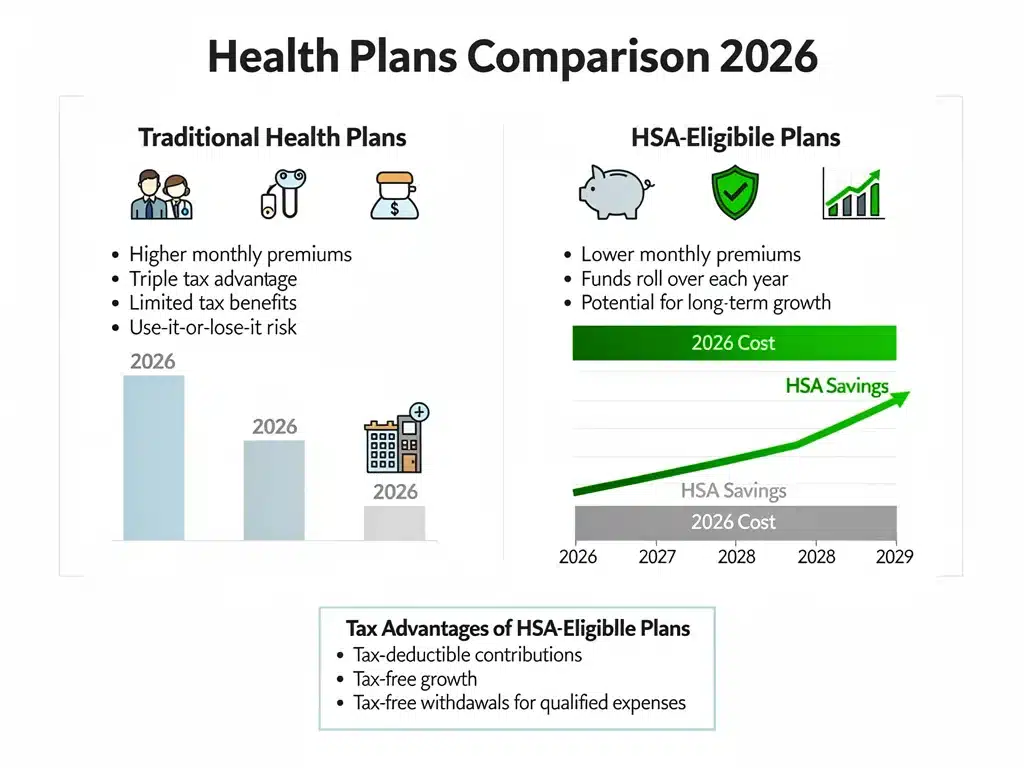
The 2026 HSA Advantage changes materially expand eligibility and add flexibility for some consumers. They also demonstrate that federal HSA rules can continue evolving through legislation and IRS guidance.
Future contribution limits will continue receiving inflation adjustments under current law. In fact, the IRS has already announced higher HSA limits for 2027.
Consumers should therefore review HSA rules each year rather than assuming prior limits remain current. Legislative changes can also affect eligibility and qualified expenses.
Anticipated Policy Changes and Impact
Future HSA Advantage changes cannot be predicted with certainty because Congress can amend eligibility, tax treatment, or contribution rules. Proposed changes should not be treated as enacted law.
The IRS has already announced 2027 contribution limits of $4,500 for self-only coverage and $9,000 for family coverage. Those amounts do not replace the 2026 limits discussed here.
Official IRS and Treasury guidance remains the strongest source for federal HSA rules. Consumers should distinguish finalized regulations from proposals, commentary, and political discussions.
- Monitor IRS and Treasury guidance for finalized changes.
- Distinguish proposed legislation from enacted law.
- Recheck contribution limits and eligibility annually.
| Key Point | Brief Description |
|---|---|
| Enhanced Savings | Higher 2026 limits and expanded eligibility can increase HSA opportunities, but a 25% savings result is not guaranteed. |
| Tax Advantages | Eligible contributions, account earnings, and qualified distributions can receive favorable federal tax treatment. |
| Long-Term Planning | Unused HSA balances can roll forward and potentially support future qualified healthcare expenses. |
| Employer Role | Employer deposits can increase HSA value but count toward the applicable annual contribution limit. |
Frequently Asked Questions About the 2026 HSA Advantage
The main 2026 advantages are higher contribution limits, federal tax benefits, and expanded eligibility for certain bronze, catastrophic, and direct primary care arrangements. No federal rule guarantees a 25% savings rate.
You generally need qualifying HSA-compatible health coverage, no disqualifying coverage, no Medicare enrollment, and you cannot be another taxpayer’s dependent. New 2026 exceptions expand eligibility for certain plans and arrangements.
Many HSA custodians offer investments such as mutual funds or similar options, although availability, fees, and minimum cash balances vary. Investments can lose value and returns are not guaranteed.
Before age 65, non-qualified distributions are generally taxable and may face an additional 20% federal tax. After age 65, the additional 20% tax generally no longer applies, but ordinary income tax can remain.
Employers can make direct HSA contributions or provide qualifying incentives under their benefit programs. Employer and employee contributions generally share the same annual federal HSA contribution limit.
What this means
The 2026 HSA Advantage rules provide genuine new opportunities, particularly through higher contribution limits and broader eligibility. These changes can improve healthcare savings for people who qualify.
The headline promise of saving 25% should not be interpreted as an automatic result. Actual savings depend on taxes, healthcare use, contributions, employer funding, investments, and fees.
The most effective approach is to verify eligibility, understand qualified expenses, monitor annual limits, and integrate the HSA with broader financial planning. Official IRS guidance should remain the primary reference.