Future of Retirement Benefits: 3 Critical 2026 Changes

Anúncios
Retirement Benefits in 2026 reflect several important federal updates for Americans planning retirement. Social Security benefits received a 2.8% cost-of-living adjustment, while the maximum earnings subject to Social Security tax increased to $184,500.
Retirement savers also have higher contribution limits: employees can contribute up to $24,500 to 401(k) plans in 2026, while the IRA contribution limit increased to $7,500. Those aged 60 through 63 may qualify for a higher 401(k) catch-up contribution of $11,250.
Readers should monitor Social Security claiming rules, earnings limits and future COLA announcements while reviewing workplace and IRA savings opportunities. For 2026, workers below full retirement age face a $24,480 earnings limit before benefits may be temporarily withheld.
Anúncios
Understanding the Looming Shifts in Retirement Benefits
The year 2026 is poised to bring significant adjustments to how Americans approach and utilize their retirement savings. These changes reflect ongoing legislative efforts to bolster retirement security and adapt to evolving economic realities.
Policymakers aim to address long-standing challenges, including inflation, longevity risks, and the accessibility of retirement plans for all workers. The focus is on creating a more resilient and equitable system for future retirees.
Individuals and employers alike must pay close attention to these reforms, as they will directly influence investment strategies, contribution limits, and withdrawal options. Proactive engagement with these updates is essential for navigating the complex financial terrain ahead.
Critical Change 1: Expanded Access and Auto-Enrollment in 401(k)s
One of the most impactful changes slated for 2026 involves broadening access to 401(k) plans and implementing widespread auto-enrollment provisions. This initiative aims to bring more Americans into the retirement savings fold, particularly those in smaller businesses or part-time roles.
The Secure Act 2.0, passed in late 2022, laid much of the groundwork for these impending reforms, with many provisions scheduled to take effect in the coming years. By 2026, many employers will be required to automatically enroll eligible employees into their 401(k) plans, albeit with the option to opt out.
This shift is expected to significantly increase participation rates, especially among younger workers and those who might not otherwise prioritize retirement savings.
The long-term implications for national savings rates and individual financial well-being are substantial, reshaping the future of retirement benefits 2026.
Auto-Enrollment and Escalation Mandates
New mandates will require employers to automatically enroll eligible new employees in 401(k)s at a contribution rate of at least 3%, escalating by 1% each year up to a maximum of 10-15%. This gradual increase is designed to make saving less burdensome.
This measure is particularly beneficial for workers who tend to procrastinate on financial planning, providing a default mechanism for wealth accumulation. The default contribution rates are set to be reviewed periodically to ensure they remain adequate in supporting retirement goals.
- Tax credits for small businesses starting new retirement plans are set to expand, reducing administrative burdens.
- Pooled Employer Plans (PEPs) will become more accessible, allowing multiple employers to join a single plan, lowering costs and complexity.
- These incentives aim to close the gap in retirement plan offerings between large corporations and small enterprises.
Critical Change 2: Adjustments to Catch-Up Contributions and Roth Options
The future of retirement benefits 2026 also includes significant modifications to catch-up contributions for older workers and an expansion of Roth options within employer-sponsored plans. These changes aim to provide greater flexibility and tax-efficient savings opportunities.
Anúncios
For individuals approaching retirement age, the ability to contribute more in their later working years can dramatically impact their final savings balance. The new rules are designed to enhance this capacity, recognizing the unique financial situations of older employees.
Furthermore, the increased availability of Roth options within 401(k)s offers a valuable alternative for those who anticipate being in a higher tax bracket in retirement. This strategic shift allows for tax-free withdrawals in the future, a key component of effective tax planning for the future of retirement benefits 2026.

Enhanced Catch-Up Contributions for Older Workers
Starting in 2026, individuals aged 60 to 63 will be eligible for significantly higher catch-up contributions to their 401(k)s, exceeding current limits. This provision empowers those nearing retirement to make up for lost time or unexpected financial setbacks.
The specific amounts are subject to inflation adjustments, but the intent is to create a substantial window for accelerated savings. This targets a demographic that often faces unique financial pressures and could greatly benefit from increased contribution flexibility.
- For individuals earning over a certain income threshold (e.g., $145,000 in 2023, subject to inflation), catch-up contributions must be made to a Roth account.
- This change ensures that high-income earners benefit from tax-free withdrawals in retirement, while also providing immediate tax revenue for the government.
- It represents a strategic move to balance individual tax benefits with broader fiscal considerations, influencing the future of retirement benefits 2026.
Critical Change 3: Pension Plan Modernization and De-risking Trends
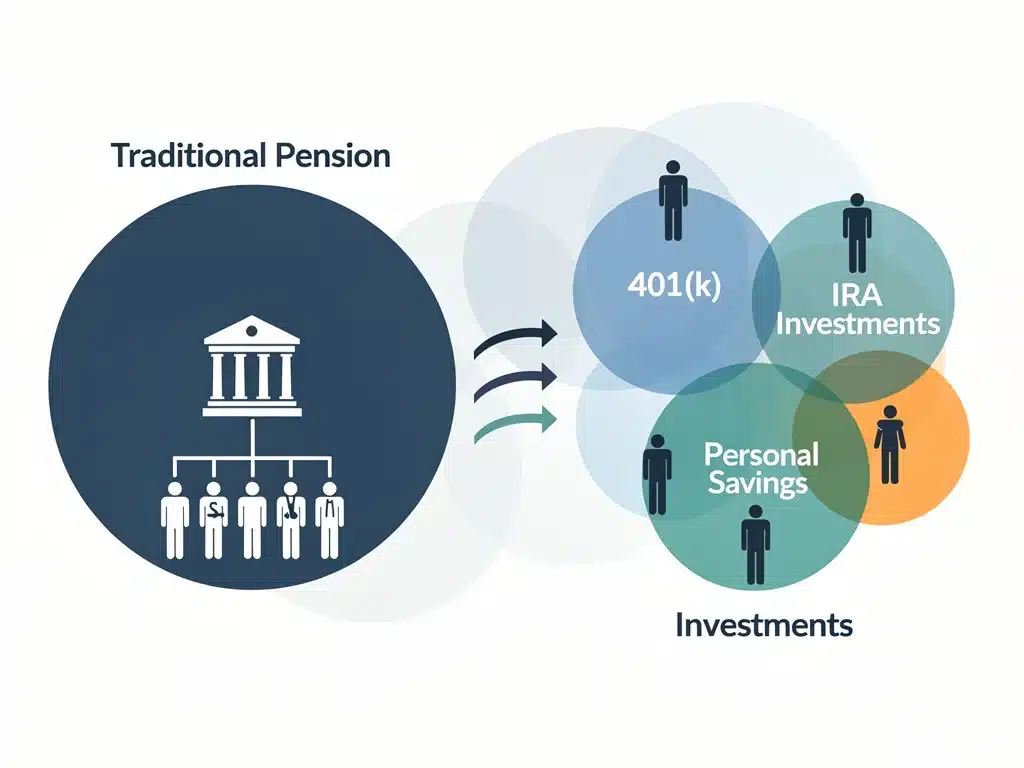
While 401(k)s dominate much of the retirement benefits discussion, traditional pension plans are also undergoing significant transformations. The future of retirement benefits 2026 includes ongoing modernization efforts and a continued trend towards de-risking for defined benefit plans.
Many legacy pension plans are facing funding challenges and administrative complexities, prompting plan sponsors to explore various strategies to manage these liabilities. These efforts aim to secure benefits for current retirees while adapting to modern financial practices.
This includes shifts towards hybrid plans, lump-sum buyouts, and increased use of annuity purchases to transfer risk. These developments are critical for the long-term sustainability of pension benefits and the overall stability of the retirement ecosystem, defining the future of retirement benefits 2026.
De-risking Strategies for Defined Benefit Plans
Pension plan sponsors are increasingly utilizing strategies like lump-sum windows, where retirees can opt for a one-time payment instead of monthly annuities. This helps companies reduce their long-term financial obligations and administrative burdens.
Another prevalent de-risking tactic involves pension buyouts, where an insurance company assumes the responsibility of paying future pension benefits. This transfers the investment and longevity risk from the employer to a third-party insurer.
- New hybrid pension models, combining elements of defined benefit and defined contribution plans, are gaining traction.
- These models often offer a guaranteed minimum benefit while also providing an individual account component, blending security with flexibility.
- This evolution reflects an attempt to offer more attractive and sustainable retirement options in an ever-changing economic environment, impacting the future of retirement benefits 2026.
Navigating the New Landscape of Retirement Savings
The impending changes to the future of retirement benefits 2026 necessitate a proactive approach to personal financial planning. Individuals must re-evaluate their current savings strategies and consider how these reforms will impact their long-term goals.
It is not enough to simply be aware of these changes; understanding their nuances and consulting with financial advisors will be crucial. Tailoring strategies to individual circumstances will ensure optimal utilization of the new rules and opportunities.
Employers also face significant adjustments, from updating their plan administration to communicating these complex changes effectively to their workforce. Compliance and clear guidance will be paramount for seamless transitions into the new regulatory environment.
Impact on Personal Retirement Planning
For many, the expanded access and auto-enrollment features mean a simpler path to starting retirement savings. This removes a significant barrier for those who may have found the process daunting or simply never got around to it.
However, individuals should actively review their default contribution rates and consider increasing them if their financial situation allows. Relying solely on the minimum auto-enrollment rate might not be sufficient to achieve desired retirement goals, especially with the future of retirement benefits 2026 evolving.
The enhanced catch-up contributions for older workers present a valuable opportunity to boost savings in the final years of employment. This flexibility acknowledges varying career paths and financial trajectories, allowing for a stronger finish in retirement preparation.
Employer Responsibilities and Opportunities
Employers, particularly small businesses, will find new incentives and streamlined options for offering retirement plans. This can be a powerful tool for attracting and retaining talent, enhancing their overall benefits package.
The auto-enrollment mandates, while requiring initial setup, are designed to reduce the administrative burden over time by standardizing participation. Clear communication with employees about these changes will be vital to foster trust and encourage active engagement with their retirement plans.
Staying informed about regulatory updates and leveraging available resources will help employers navigate these transitions smoothly. The successful implementation of these changes will significantly shape the future of retirement benefits 2026 for their workforce.
The Broader Economic and Social Implications
These critical changes to the future of retirement benefits 2026 are not just about individual accounts; they have broader economic and social ramifications. Increased retirement savings can contribute to national economic stability and reduce reliance on social safety nets.
A more robust retirement system can also alleviate some of the pressures on programs like Social Security, ensuring a more balanced approach to elder care and financial support. These policy shifts reflect a long-term vision for a financially secure populace.
Moreover, the emphasis on accessibility and automatic features aims to reduce wealth disparities in retirement, promoting greater equity across different demographic groups. This focus on inclusivity is a cornerstone of the legislative intent behind these reforms, shaping the future of retirement benefits 2026.
Preparing for the Future of Retirement Benefits 2026
As 2026 approaches, proactive engagement with these upcoming changes is non-negotiable for both individuals and employers. Understanding the specifics of each reform allows for strategic adjustments to current financial plans and offerings.
Regularly reviewing retirement plan statements, consulting with financial professionals, and staying informed about legislative updates will be key to maximizing the benefits of these changes. The landscape of retirement security is dynamic, requiring continuous attention.
Ultimately, these critical changes are designed to strengthen the foundation of retirement in the United States, offering new pathways and safeguards for a more secure future. Adapting to these shifts will ensure individuals are well-positioned for their golden years.
| Key Change | Impact Summary |
|---|---|
| Expanded 401(k) Access | Auto-enrollment mandates for new plans, increased small business incentives. |
| Catch-Up & Roth Options | Higher catch-up limits for ages 60-63, mandatory Roth for high earners. |
| Pension Modernization | De-risking strategies, hybrid models, and increased annuity usage. |
| Overall Goal | Enhance retirement security, increase participation, and adapt to economic shifts. |
Frequently Asked Questions About 2026 Retirement Changes
The main objective is to bolster retirement security for more Americans by increasing access to savings plans, offering greater flexibility for contributions, and modernizing existing pension structures. These reforms aim to adapt to current economic conditions and promote broader financial well-being.
If your employer falls under the new mandates, you will be automatically enrolled in their 401(k) plan at a default contribution rate, typically starting at 3% and increasing annually. You retain the option to adjust your contribution rate or opt out entirely, but this makes saving easier by default.
Yes, individuals aged 60 to 63 will see an increase in their allowable catch-up contributions to 401(k) plans, allowing them to save more aggressively as they near retirement. This provision is designed to help those who need to boost their savings in their later working years.
The expansion and, for high earners, mandatory Roth treatment of catch-up contributions mean more opportunities for tax-free withdrawals in retirement. This is particularly beneficial if you expect to be in a higher tax bracket during your retirement years, offering significant long-term tax advantages.
Traditional pension plans are undergoing modernization, with a continued trend towards de-risking strategies like lump-sum buyouts and increased use of annuity purchases by plan sponsors. Hybrid pension models are also emerging, blending guaranteed benefits with individual account components to enhance sustainability and flexibility.
What This Means for Your Retirement Future
The evolving landscape of retirement benefits in 2026 signifies a concerted effort to fortify financial security for Americans. These critical changes underscore the importance of proactive engagement with personal finance and continued vigilance regarding policy developments.
Individuals should assess their current retirement plans in light of these reforms, seeking professional advice to optimize contributions and investment strategies. Employers, too, must adapt their offerings to remain compliant and competitive in attracting talent.
Staying informed about the future of retirement benefits 2026 and understanding their implications will be paramount for navigating the path to a secure and prosperous retirement. The journey ahead requires informed decisions and strategic planning to fully leverage these upcoming opportunities.