Dental and Vision Benefits 2026: Reduce Out-of-Pocket by 30%

Anúncios
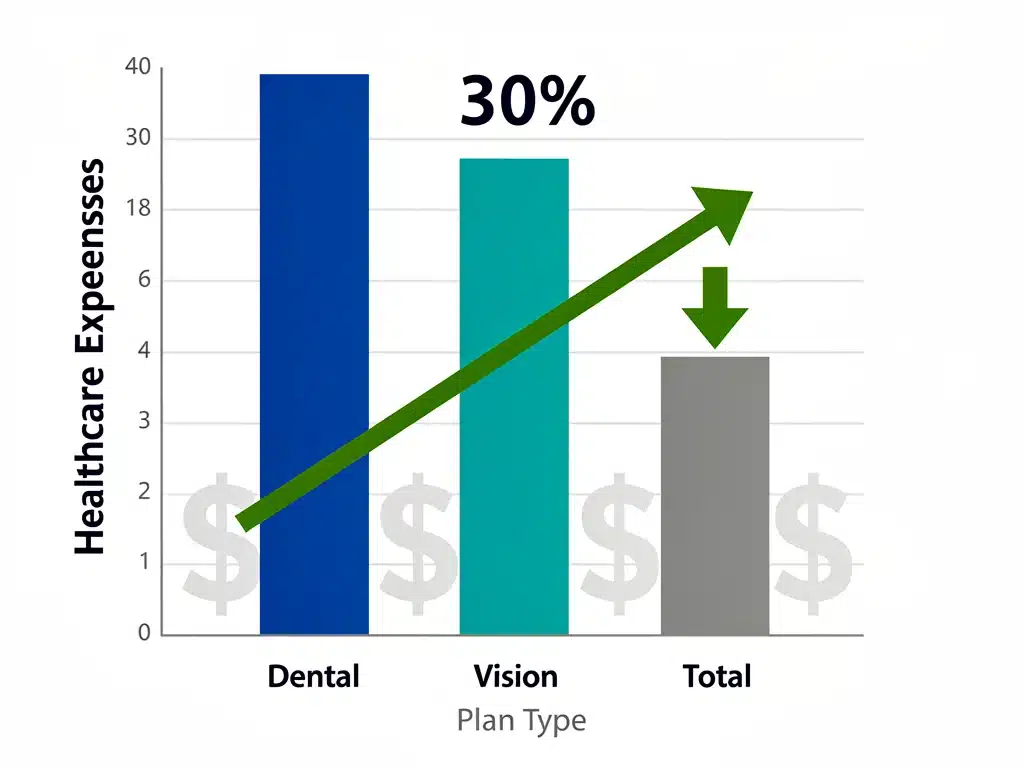
Dental Vision Benefits 2026 can help reduce out-of-pocket costs when consumers carefully compare networks, deductibles, annual maximums, covered services and tax-advantaged accounts. A 30% reduction is a savings target rather than a guaranteed nationwide benefit or federally mandated discount.
The landscape surrounding Dental Vision Benefits 2026 offers several ways for individuals and families to control spending, but there is no federal rule guaranteeing that everyone can reduce dental and vision expenses by exactly 30% this year.
Actual savings depend on factors including premiums, provider networks, deductibles, copayments, coinsurance, annual dental maximums and the services a household expects to use. Employer contributions and access to tax-advantaged accounts can also materially change total costs.
Anúncios
This guide explains how to evaluate those variables and identify realistic opportunities to spend less. The focus is on comparing coverage carefully, using available tax advantages and avoiding assumptions that every dental or vision plan follows the same rules.
Navigating the Evolving Landscape of Dental Vision Benefits 2026
Dental and vision coverage in the United States remains fragmented in 2026. Consumers may receive these benefits through employers, individual insurance, Marketplace health plans, stand-alone products, Medicaid, CHIP or other public programmes depending on eligibility.
Federal Marketplace rules continue to distinguish children’s benefits from adult coverage. Pediatric oral and vision care are Essential Health Benefits, while adult dental and adult vision are not federally required Essential Health Benefits for Marketplace health plans.
That distinction makes plan comparison especially important for adults. Rather than assuming that a health policy includes routine eye exams, glasses or dental services, consumers should review the Summary of Benefits and the separate dental or vision documents before enrolling.
Key Policy Changes and Their Impact
There is no verified nationwide 2026 mandate requiring private plans to expand preventive dental benefits, increase eyeglass allowances or provide a specific new level of tele-dentistry and tele-optometry coverage for every American.
What is confirmed is that 2026 Marketplace data include stand-alone dental plans, while adult dental remains optional under Marketplace health coverage. Adult vision is also optional, and HealthCare.gov notes that only some Marketplace health plans include it.
Benefit design can therefore differ substantially by state, insurer and employer. Consumers should focus on the exact 2026 plan available to them instead of relying on broad claims about nationwide expansions in Dental Vision Benefits 2026.
- Adult dental coverage is not a federally required Essential Health Benefit in Marketplace plans.
- Adult vision coverage is included only in some Marketplace health plans.
- Pediatric oral and vision care receive different treatment under federal Marketplace rules.
Understanding Out-of-Pocket Expenses and Reduction Strategies
Out-of-pocket dental and vision spending can include deductibles, copayments, coinsurance, charges above plan allowances and services excluded from coverage. Dental plans may also have annual benefit maximums that shift additional costs to the patient once the limit is reached.
Aiming to reduce these expenses by 30% can be a useful personal budgeting objective, but the result is not guaranteed. Someone requiring major dental work may face a completely different financial outcome from a household using only examinations and routine preventive services.
The strongest strategy is to calculate total annual cost rather than looking at premiums alone. Premiums, expected procedures, network prices, annual maximums and employer contributions should all be considered before deciding which option offers better value.
Anúncios
Leveraging Employer-Sponsored Plans
Employer-sponsored benefits can be attractive when an employer pays part of the premium or negotiates favourable group rates. However, employers are not required to subsidise dental and vision coverage equally, so the employee contribution should still be compared with alternatives.
During open enrollment, employees should examine the network, annual dental maximum, waiting periods, orthodontic provisions, examination frequency, frame or contact-lens allowances and the cost of adding dependants before selecting coverage.
Tax-advantaged accounts can provide another source of savings when applicable. Eligible dental and vision expenses may qualify for payment from an HSA or employer-sponsored health FSA under applicable federal tax rules, reducing the effective after-tax cost.
- Compare employee premiums and employer contributions.
- Check dental annual maximums and vision allowances before enrolling.
- Use eligible HSA or FSA funds when the applicable tax rules are satisfied.
Exploring Individual and Family Plans for Dental Vision Benefits 2026
Consumers without employer coverage can evaluate individual dental or vision products, but the two markets operate differently. HealthCare.gov offers stand-alone dental plans alongside Marketplace health coverage, while stand-alone adult vision plans are purchased outside the federal Marketplace.
For dental insurance, important variables include monthly premiums, deductibles, annual maximums, coinsurance levels, network size and waiting periods. HealthCare.gov specifically warns that some stand-alone adult dental plans impose waiting periods before covering particular services.
Vision products should be evaluated according to examination benefits, frame allowances, lens upgrades, contact-lens benefits and participating optical providers. A low premium is not necessarily the lowest-cost option if frequently purchased services remain largely uncovered.
Discount Plans vs. Traditional Insurance
A dental discount plan is not the same as dental insurance. Members generally pay a membership fee to access negotiated discounts from participating providers, while the consumer remains responsible for paying the discounted service price.
Traditional dental insurance generally involves premiums and a contractual sharing of covered costs, subject to deductibles, coinsurance, annual maximums, exclusions and network rules. Its value depends heavily on the procedures someone expects to need.
Neither structure is automatically cheaper. Consumers comparing Dental Vision Benefits 2026 should estimate their likely annual spending under each option instead of assuming insurance always provides more savings or that a discount programme always costs less.
- Discount plans provide negotiated prices rather than insurance reimbursement.
- Traditional insurance can include deductibles, coinsurance and annual maximums.
- Compare expected annual costs using the services you are likely to need.
Maximizing Preventive Care and Network Utilization
Regular dental examinations and eye care can help identify problems earlier, but consumers should not assume that every preventive service is completely covered. Benefit frequency, cost-sharing and eligible procedures vary among dental and vision plans.
Before receiving care, confirm what the plan actually covers and how often. A dental plan may distinguish examinations, cleanings and X-rays, while a vision plan may have separate schedules for eye examinations, frames, lenses and contact lenses.
Provider network status can also materially affect costs. Negotiated network prices often reduce patient responsibility, although the exact difference depends on the plan and procedure rather than a universal discount percentage.
Understanding In-Network vs. Out-of-Network Providers
In-network providers have contractual arrangements with the benefit plan that establish negotiated prices and reimbursement rules. Staying in network can therefore reduce exposure to higher charges, especially when the plan offers limited out-of-network benefits.
Out-of-network treatment may involve higher coinsurance, a different allowable charge or no coverage for certain services. Patients can also become responsible for amounts above the insurer’s recognised charge, depending on the plan and applicable law.
Network directories can change, so consumers should verify participation with both the insurer and provider before treatment. For expensive dental procedures, requesting a written treatment estimate or pre-treatment estimate can make potential costs considerably clearer.
- Verify network participation before receiving non-emergency services.
- Request an estimate for expensive dental procedures when available.
- Review the plan’s rules for out-of-network reimbursement and patient responsibility.
Leveraging Technology and Telehealth for Savings
Telehealth can provide useful access to certain dental and vision consultations, but it is not a universal substitute for an in-person examination. The appropriateness of remote care depends on the patient’s problem, available clinical information and state professional-practice rules.
Teledentistry may support triage, follow-up and other services when sufficient information is available. The American Dental Association states that remotely delivered dental care should meet the same professional standard that would apply to an equivalent in-person service.
Technology may also help consumers compare optical products and benefits more easily. Online retailers can provide additional choices for prescription eyewear and contact lenses, although network reimbursement, prescription requirements and return policies should be checked before ordering.
The Rise of Tele-Dentistry and Tele-Optometry
Remote consultations can be useful when a clinician can appropriately evaluate the issue without performing a procedure. They may reduce travel or time away from work, but that does not necessarily mean the insurer will charge a lower copayment.
Dental procedures such as fillings, extractions and cleanings still require physical care, while many eye conditions require examination equipment that cannot be replicated through a basic video consultation. Telehealth therefore has practical clinical limits.
Consumers interested in using telehealth as part of Dental Vision Benefits 2026 should confirm coverage before the appointment and determine whether follow-up in-person care may still be required, avoiding the assumption that every virtual visit produces direct financial savings.
- Confirm whether remote consultations are covered by the specific plan.
- Use telehealth only when appropriate for the clinical issue.
- Compare online and in-person eyewear costs after applying plan benefits.
Strategic Financial Planning for Dental Vision Benefits 2026
Financial planning can have a greater effect on annual costs than chasing a fixed 30% savings target. Start by estimating known expenses, including examinations, cleanings, glasses, contact lenses and any dental treatment already recommended.
Next, compare those expenses with available premiums, deductibles, allowances, annual maximums and network rates. Someone expecting extensive restorative dentistry may prefer a different plan design from a household primarily seeking routine preventive services.
Tax-advantaged accounts can further reduce effective costs for eligible expenses. For 2026, the federal HSA contribution limit is $4,400 for self-only coverage and $8,750 for family coverage for eligible individuals meeting HSA requirements.
Annual Review of Benefit Plans
Dental and vision plans should be reviewed each year because premiums, networks, annual maximums and allowances may change. Household needs can also change because of planned dental procedures, new prescriptions or the addition of dependants.
Open enrollment is an opportunity to compare the current option against alternatives rather than automatically renewing. Pay particular attention to providers you want to keep, because a change in network participation can outweigh a modest premium difference.
For anticipated major dental work, compare the timing of the procedure with annual maximums and waiting periods without delaying medically necessary treatment solely for financial reasons. The appropriate schedule should ultimately be determined with the treating professional.
- Compare premiums, networks and benefits each year.
- Consider anticipated dental and vision needs before selecting coverage.
- Check waiting periods and annual maximums before scheduling elective services.
Government Programs and Subsidies for Dental Vision Benefits 2026
Medicaid and CHIP can provide important dental and vision assistance, particularly for children, but benefits vary by programme and state. Federal Medicaid rules require comprehensive dental services for enrolled children through EPSDT, while adult dental benefits remain largely determined by each state.
CHIP also requires dental coverage for children, although states have flexibility in designing benefit packages within federal standards. Consumers should therefore consult their state’s Medicaid or CHIP programme rather than relying on one nationwide adult dental benefit description.
The ACA Marketplace is different. Premium tax credits can lower qualifying health-plan premiums, but there is no general federal subsidy guaranteeing discounted adult dental or stand-alone vision coverage simply because someone purchases those benefits.
Eligibility for State and Federal Aid
Eligibility for Medicaid and CHIP depends on factors including state rules, household circumstances and income. Because states administer these programmes within federal requirements, an individual should use the eligibility information for the state where coverage is sought.
Marketplace premium tax credits also follow specific household-income and coverage rules. For 2026, the federal premium-tax-credit calculation uses an indexed contribution schedule, so the amount of assistance varies rather than providing one standard discount to every enrollee.
Families comparing Dental Vision Benefits 2026 should also remember that pediatric and adult coverage are treated differently. Children’s oral and vision benefits receive stronger federal protections than routine adult dental and adult vision services.
- Check state-specific Medicaid and CHIP eligibility requirements.
- Review Marketplace eligibility separately from dental and vision coverage rules.
- Use official state or federal enrollment assistance when benefit eligibility is unclear.
Future Outlook and Long-Term Savings for Dental Vision Benefits 2026

The dental and vision market continues to evolve, but consumers should be careful with predictions about universal new benefits, AI-designed insurance plans or mandatory expansions that have not been enacted. Current savings decisions should be based on confirmed plan terms.
Technology may improve price comparison, administration and remote access, while insurers and employers may continue changing benefit designs. None of those trends establishes a guaranteed percentage reduction in out-of-pocket spending for an individual household.
Long-term savings are more likely to come from repeatedly comparing coverage with actual healthcare needs. Networks, utilisation, tax treatment and expected services remain more actionable considerations than attempting to forecast speculative future insurance changes.
Preparing for Continued Changes
Consumers should review official plan materials whenever benefits change and retain current copies of coverage documents. Employer open-enrollment materials, insurer member portals and government programme websites are generally stronger sources than promotional summaries or social-media posts.
For expensive planned dental work, obtaining estimates from more than one qualified provider may be useful when clinically appropriate. Vision shoppers can similarly compare the final price of frames, lenses or contacts after applying any available insurance allowance.
The goal is not to continuously switch coverage, but to ensure that the selected arrangement continues to match household needs. A consistent annual review can help sustain savings from Dental Vision Benefits 2026 without relying on guaranteed percentage claims.
- Monitor actual benefit documents rather than unconfirmed policy predictions.
- Compare final patient costs when significant treatment is planned.
- Review coverage whenever household needs, providers or plan terms change.
| Key Strategy | Benefit Description |
|---|---|
| Maximize Employer Plans | Compare employer contributions, networks, annual maximums and eligible tax-advantaged accounts. |
| Review Preventive Care | Use covered examinations and preventive services according to the specific plan’s rules. |
| Use In-Network Providers | Network-negotiated rates can reduce costs depending on the benefit design. |
| Use Tax Advantages | Eligible HSA or FSA expenses may be paid with tax-advantaged funds when applicable. |
Frequently Asked Questions About Dental Vision Benefits 2026
Looking Ahead: Sustaining Savings on Dental Vision Benefits in 2026
The strategies discussed for Vision Benefits and dental coverage are most effective when treated as ongoing financial planning rather than a promise of achieving one fixed percentage of savings.
Consumers can improve their chances of controlling expenses by understanding networks, comparing total annual costs and using tax-advantaged accounts when eligible. Government programmes can also provide substantial support, but eligibility and covered services need to be evaluated individually.
For Dental Vision Benefits 2026, the strongest approach is therefore to rely on confirmed plan details and official programme rules. A 30% reduction may be achievable in some circumstances, but it should remain a personal savings target rather than a guaranteed benefit.